Mark Durden & João Leal
Mark Durden & João Leal
15/May/2026
- 30/Aug/2026
This exhibition marks the tenth anniversary of Álvaro Siza’s and Eduardo Souto de Moura’s International Museum of Contemporary Sculpture and their rehabilitation of the Municipal Museum Abade Pedrosa.
Our title is adapted from the evocative term ‘architecture defrosted’ that the art historian Hubert Damisch used to account for the way in which photography alters our relationship to architecture. He was countering the idea that architecture is merely frozen music. Photography introduces time into our relationship with architecture and thereby defrosts or unfreezes architecture.
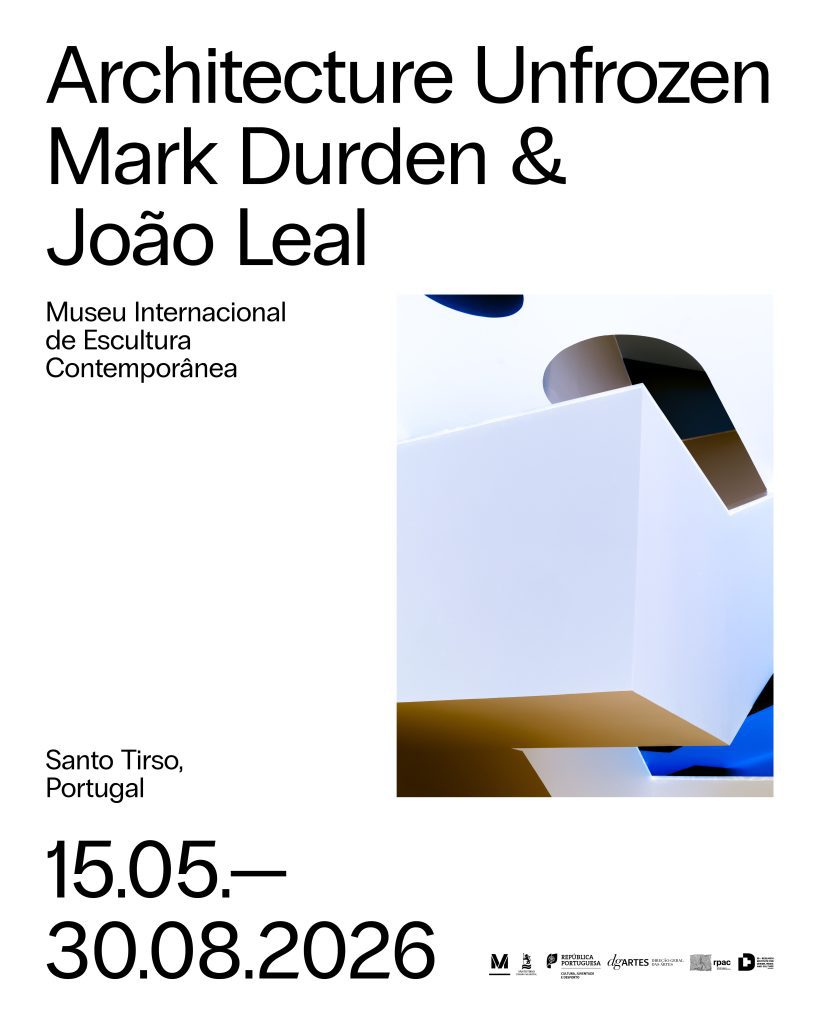
But a lot of architectural photography can be seen to still freeze architecture in the sense it tends to be rather standardised and merely illustrative. Exhibiting photographs in the buildings that are its very subject prompted us to rethink photography’s format and convention. Black and white and colour inversion opened out new formal and pictorial qualities to photography that in a way corresponded with the remarkably inventive and playful formal qualities inherent in the architecture represented. Our strategy also hopefully helps makes visible new elements of the architecture it responds to and brings us closer to the sensory qualities of its material forms, experienced over time.
Hubert Damisch, Noah’s Ark: Essays on Architecture, London and Cambridge MA: MIT Press, 2016.