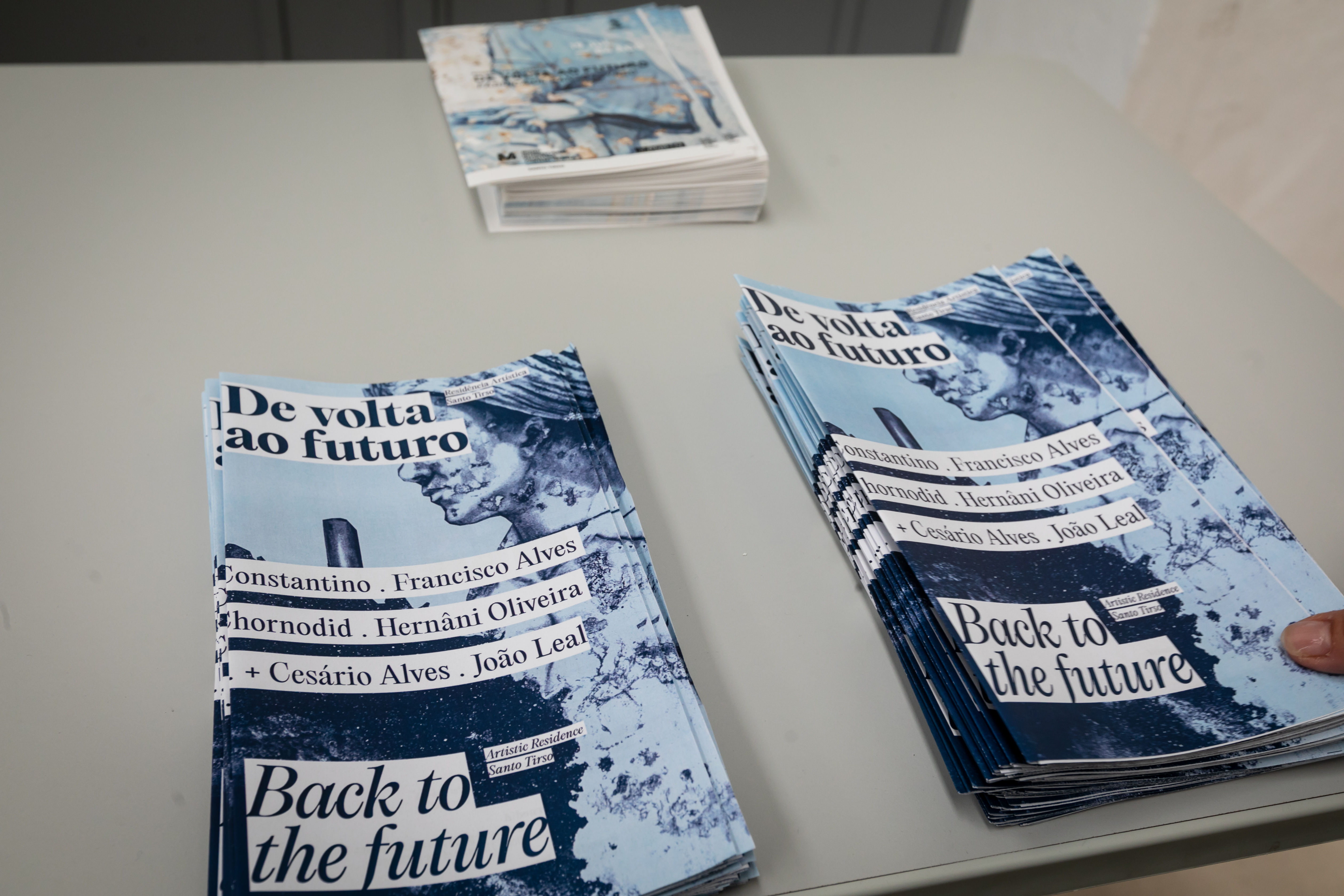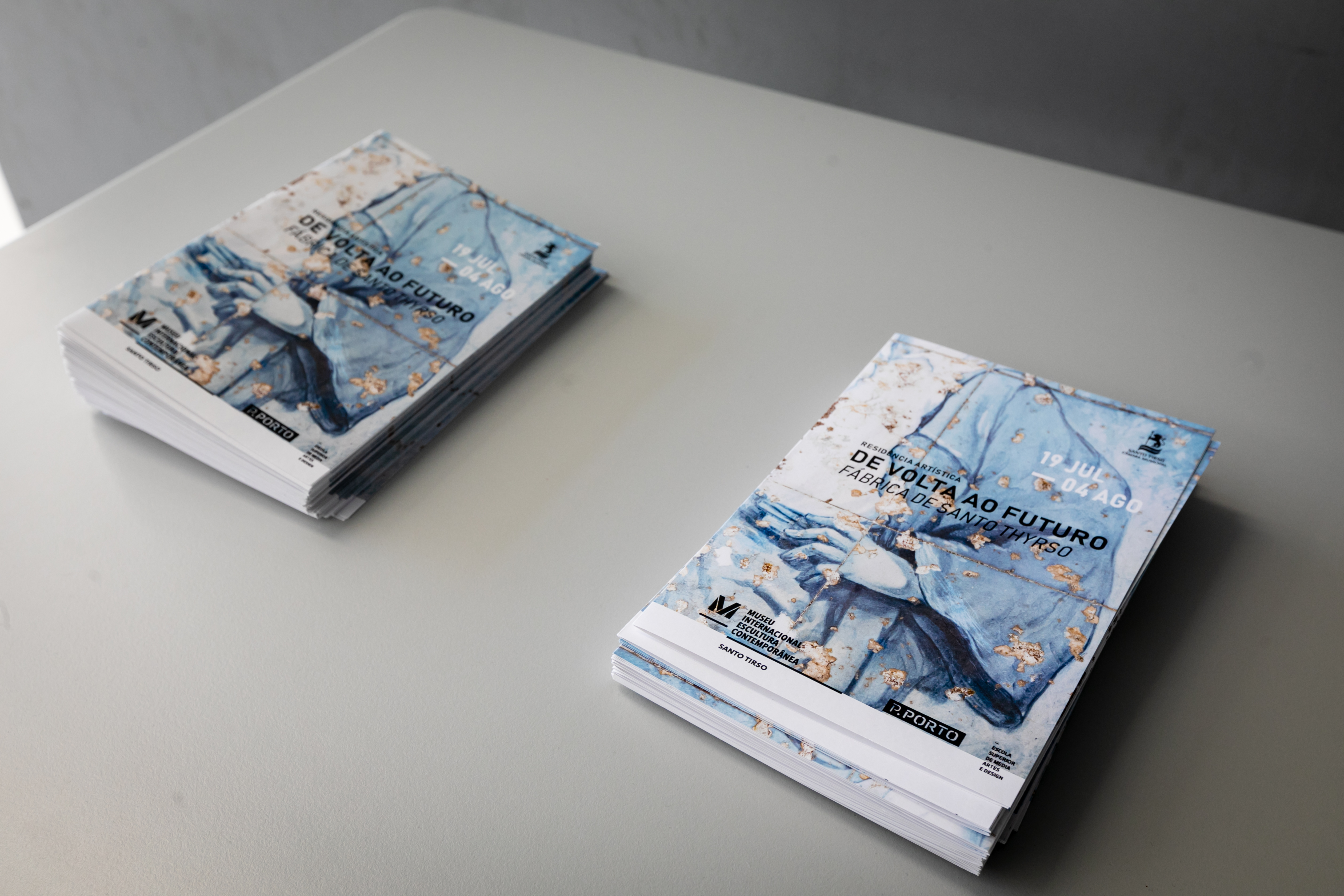
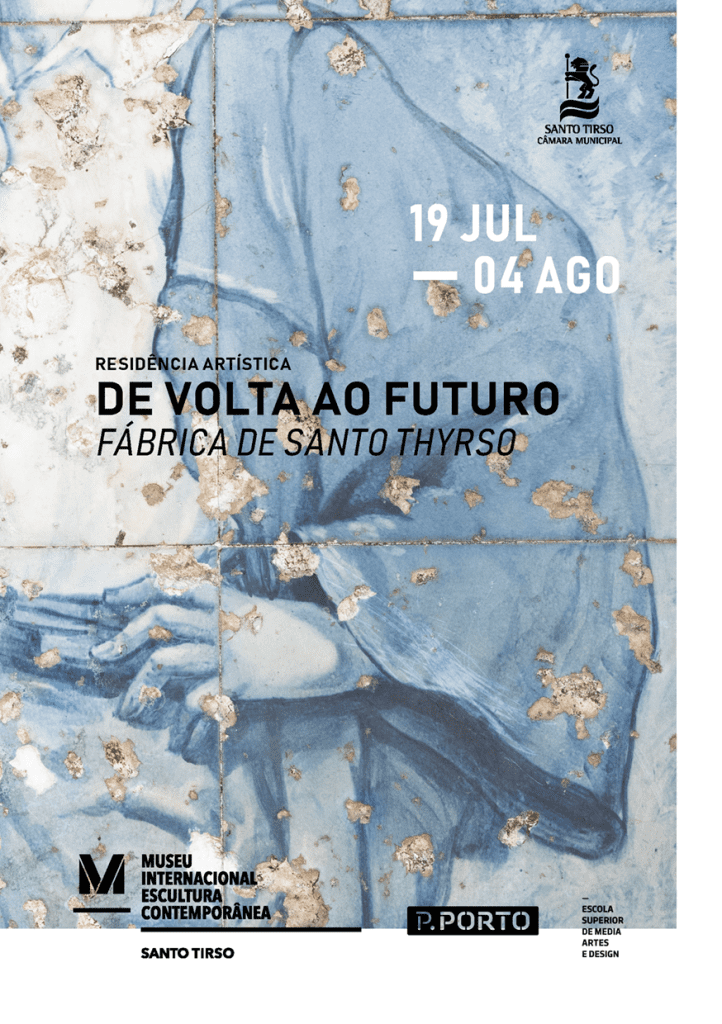
Artistic Residency – De volta ao futuro
Curso de Mestrado em Cinema e Fotografia da Escola Superior de Media Artes e Design
19/Jul/2024
- 04/Aug/2024
Just as technologies become obsolete as soon as we master them, and photographs are evidence of the past the instant they are taken, the artist residency in Santo Tirso ended when we were still imagining it. The depth of the work we present is therefore the depth of the experience in loco and the study that precedes it. Our meeting place was Colégio das Caldinhas, next to Caldas da Saúde, in the parish of Areias. It was here that we lived hot days and nights in April and where we woke up to the importance of listening, from the lowest to the highest frequencies and sound amplitudes, which for operators of an inherently visual medium can be of the utmost importance. We added our own noise and silences to the space, listened to the history of the Jesuit diaspora and visited the museum that bears witness to their commitment to science and education. But that was in the moments when we could stop, between km of travel and km of WhatsApp feeds to organize meetings, productions, meals, conversations, presentations. Everything it took for a group of prospectors to be able to dig their lode, each in their own direction, in different places in the municipality of Santo Tirso.
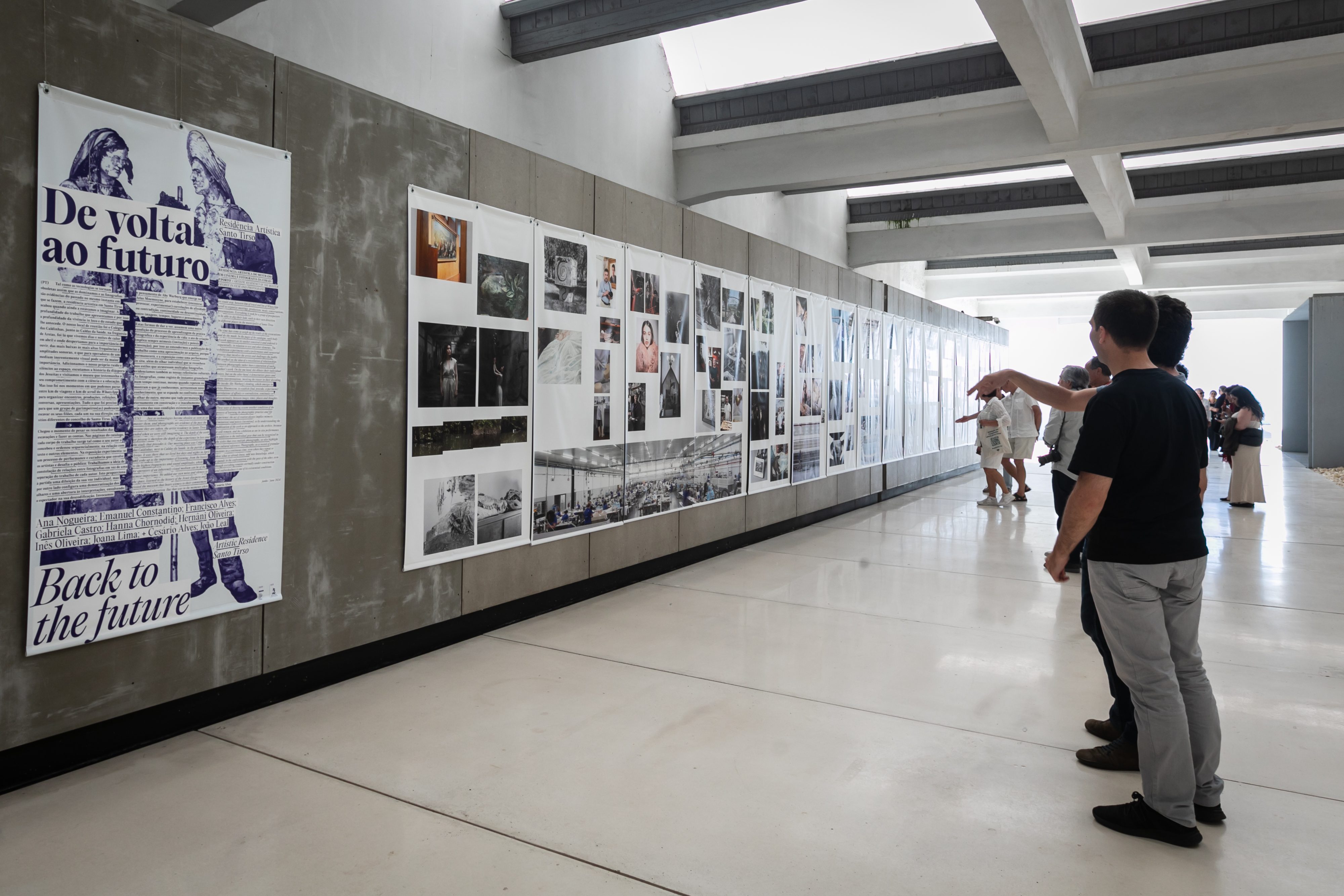
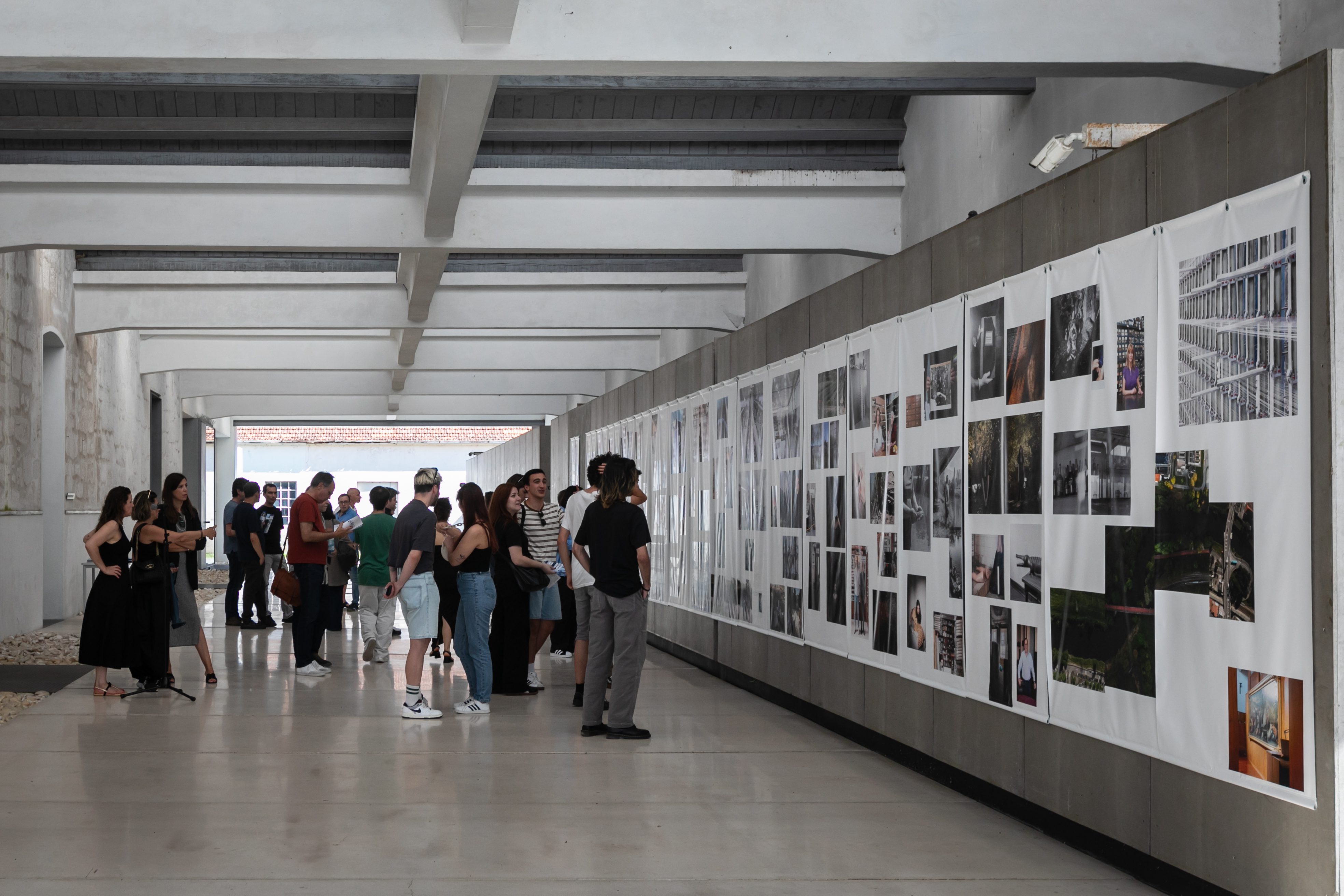
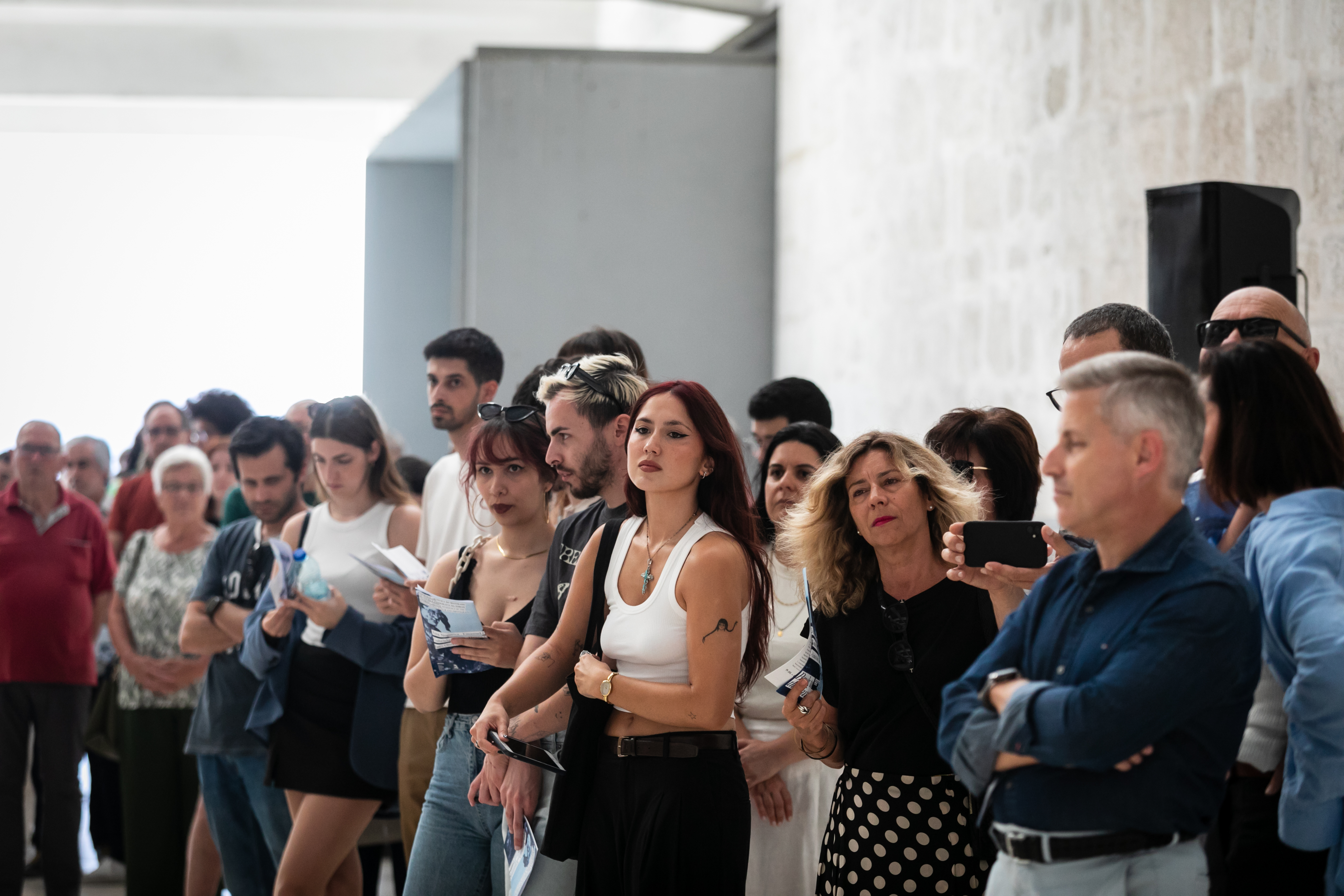
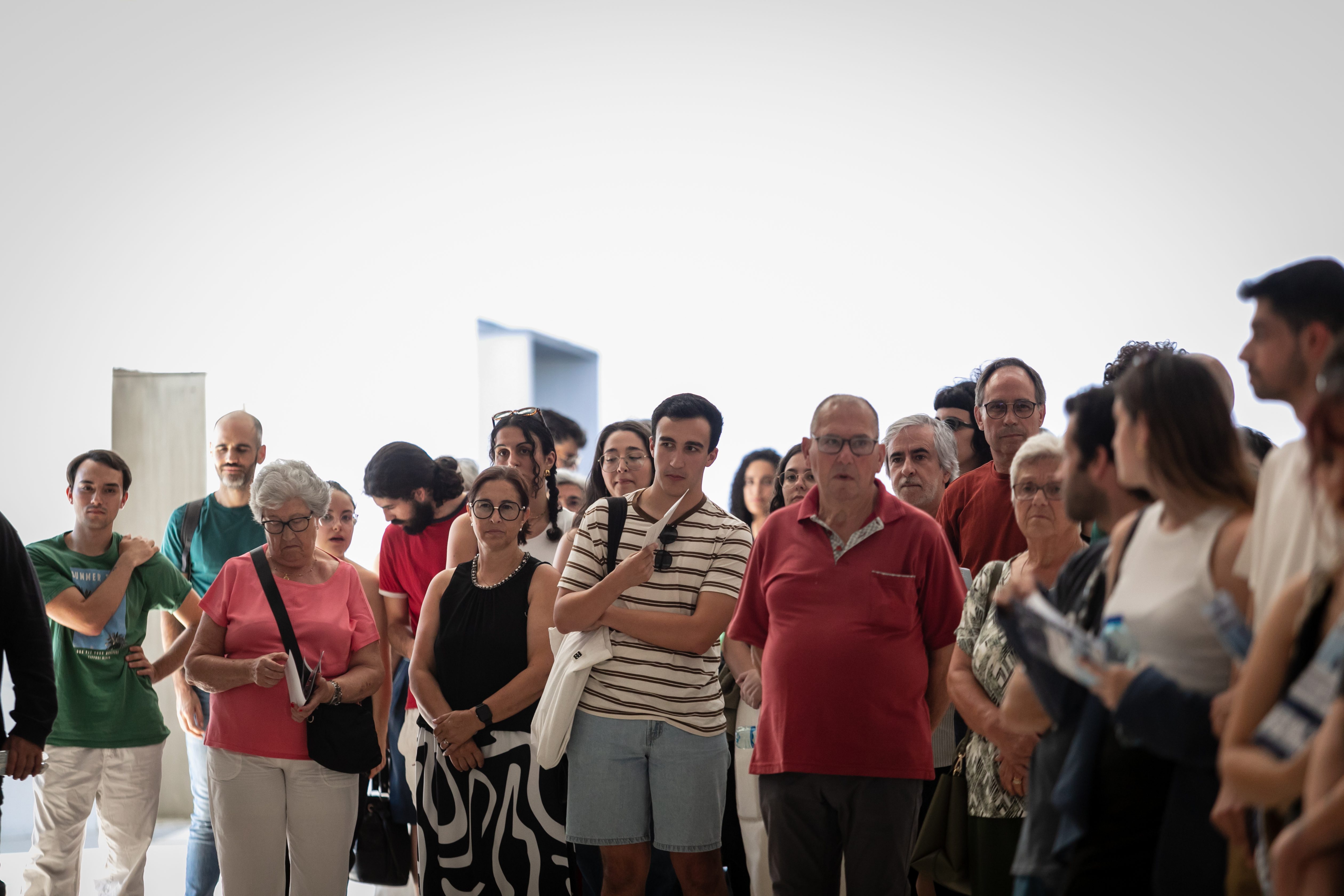
The time has come to weigh up the results of the excavations and do the math. In the pages of the catalogue, each body of work appears as its author conceived it and ordered it sequentially, in relation to text and other elements. The exhibition experiments with a performance and curatorial process that involves the artists and challenges the public. We worked on the idea of a constellation of relationships between photographs rather than a separation of each author’s work. On the one hand, this dilutes their individual voices, but on the other hand, it democratizes gazes and opens interpretations, involving the viewer in their decoding. We invoke Aby Warburg’s thinking, which emerges in Atlas Mnemosyne, to establish (find, provoke, experiment) correlations of affinity or contradiction, continuity or discontinuity, between images, times, places and thoughts.
These ways of showing assume another condition of the process of learning the photographic technique and life experience: the act of creation always implies mimesis (imitation) and poiesis (invention), so by understanding the publication of the work as an approach to the archive, because it will remain, and the exhibition as an in situ performance, in addition to the individual gaze that can be recognized in the styles that cross multiple photographs, we also highlight our cultural references. Photographs, as a record of granular instants in a continuous time, even when they repeat or show what we already know, add new knowledge, which expands in the confrontation with the gaze of the other, even though everything remains eternally under construction and unfinishedness is one of its existential conditions.
Cesário Alves, june 2024
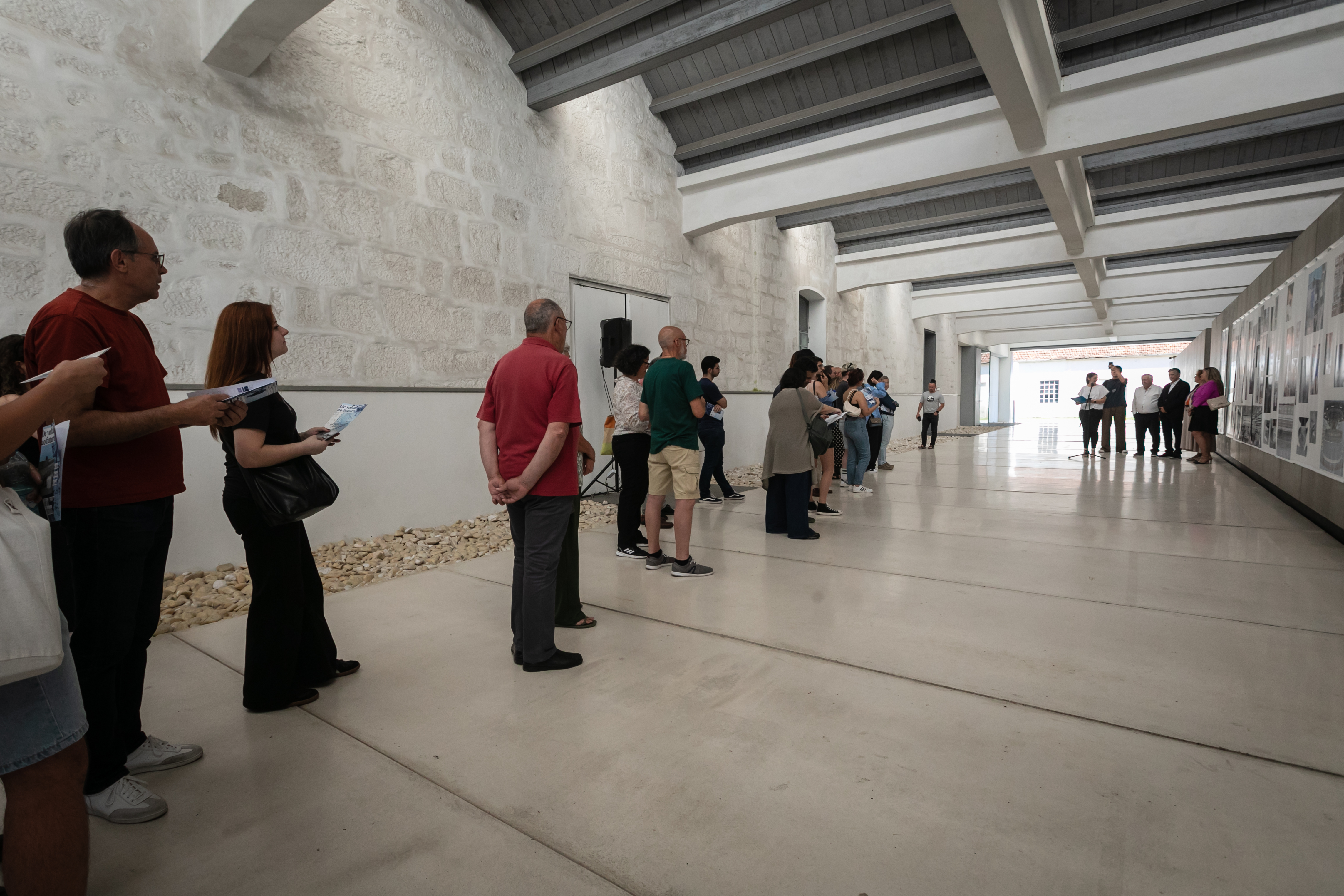
Opening